
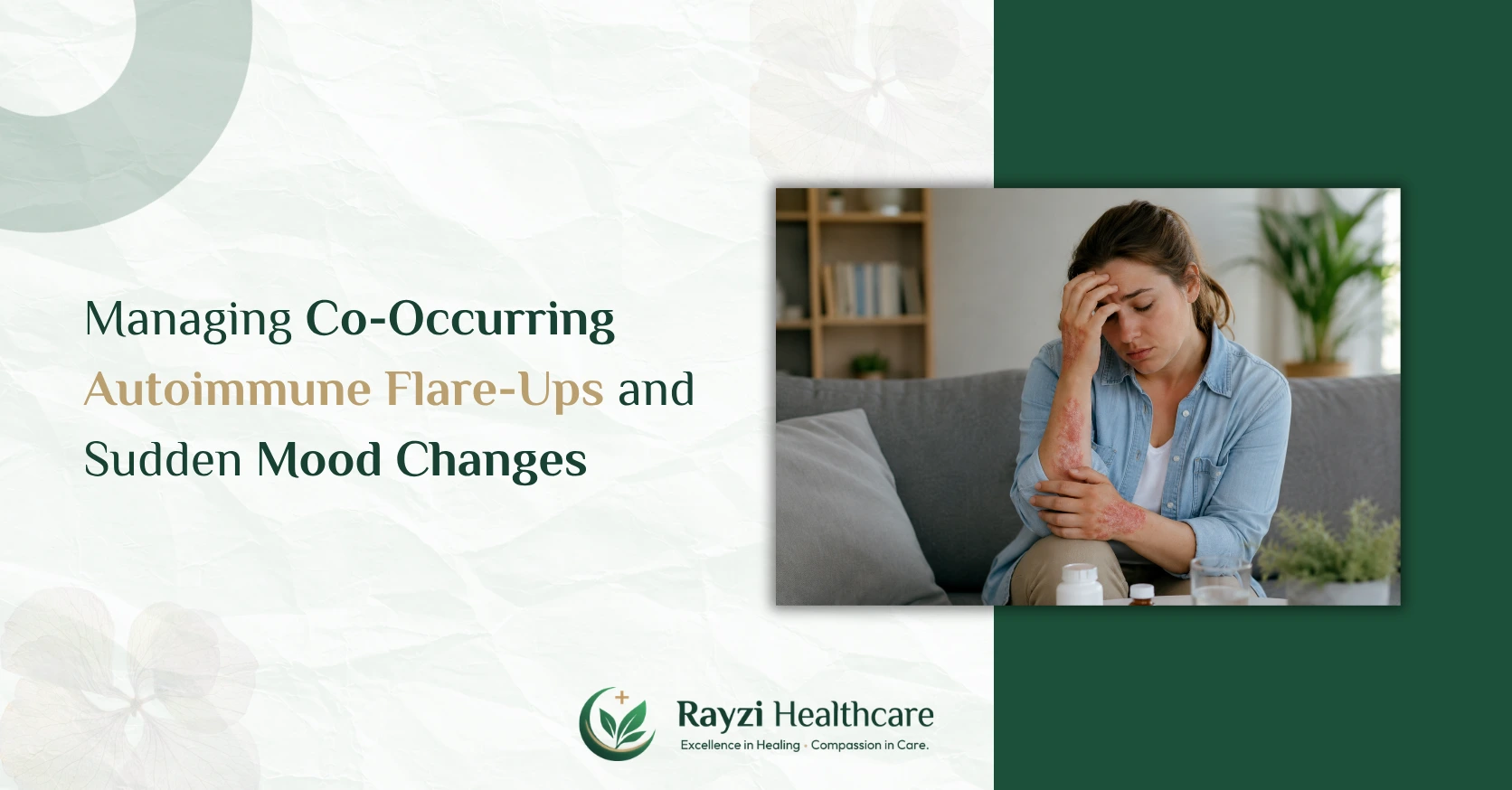
Anyone living with lupus, rheumatoid arthritis, or a similar condition already knows something most appointments never get around to discussing.
A flare isn’t just joint pain and exhaustion. It’s often a shorter fuse, more anxiety humming under the surface, tears over things that wouldn’t normally get to you.
Then the flare settles, and the mood settles with it. Easy to chalk that up to being worn down by pain.
There’s actual biology behind it though, and knowing that changes what you can do about it.
It’s Not Just the Stress of Being Sick
Being in pain is exhausting, and exhaustion affects mood, sure. But that explanation doesn’t hold up as the whole story once you look at the numbers.
A UK study published in BMJ Mental Health pulled data from over 1.5 million health records. People with autoimmune diseases, rheumatoid arthritis, lupus, inflammatory bowel disease, multiple sclerosis among them, were almost twice as likely to be diagnosed with depression, anxiety, or bipolar disorder compared to people without one.
Nearly 29 percent of people with an autoimmune disease had a lifetime diagnosis of some mood disorder, versus 18 percent in the general population. That gap didn’t shrink after researchers adjusted for age, income, or family psychiatric history. It held up regardless.
The team behind that study pointed specifically at chronic inflammation as the likely driver, not just the general difficulty of living with a hard diagnosis.
What’s Happening in the Body When a Flare Hits
During a flare, your immune system floods your system with inflammatory proteins called cytokines. Interleukin 6 and TNF alpha are among the usual suspects.
These proteins are doing exactly what they’re supposed to, attacking whatever your immune system has mistakenly flagged as a threat. The problem is they don’t stay put.
They travel through your bloodstream and cross into the brain, where they interact directly with the systems regulating mood.
Harvard researchers have dug into this mechanism specifically. Their work in mice found that these inflammatory molecules act on particular brain regions and shift mood and behavior as a result.
That lines up with something clinicians have noticed in patients for years. After an infection or a flare, some people go through mood changes that outlast the physical symptoms by a wide margin.
There’s a name for this broader pattern, actually. Sickness behavior describes a cluster of changes that show up during inflammatory states, low mood, anxiety, brain fog, a heaviness that doesn’t match how little you’ve actually done that day.
It’s the body’s inflammatory response reaching the brain. Not a character flaw, not a coping failure.
Women Seem to Carry More of This
One detail from that UK study explains something a lot of women with autoimmune disease have quietly noticed without ever having language for.
The elevated risk of mood disorders was significantly higher in women than in men with the same conditions, 32 percent versus 21 percent. Researchers suspect sex hormones and immune differences play into it.
Separate from autoimmune status entirely, women with depression tend to run higher levels of inflammatory markers than men with depression.
Stack those two patterns on top of each other and you get a group facing a kind of double exposure. More autoimmune disease to start, and a stronger inflammation to mood connection once it’s there.
Medication Muddies the Water Too
The disease process isn’t the only thing at play here. Corticosteroids, commonly used to bring flares under control, are widely known for causing mood swings and emotional instability on their own.
So during an active flare, someone can be dealing with two separate mood disruptors running at once. The inflammation itself, and the medication being used to treat it.
Untangling which one’s driving what isn’t always clean. Honestly, it doesn’t have to be perfectly untangled before it’s worth addressing.
What Actually Helps
Keeping a simple log of flares alongside mood is one of the more useful things a person can do here. It turns a vague feeling into something concrete you can bring to an appointment.
If anxiety tends to spike a day or two before a joint flare shows up, or mood tanks around a steroid taper, that’s real clinical information. Not just a bad week.
Telling both your rheumatologist and a mental health provider matters more than most people assume. It’s common for patients to mention mood to one and physical symptoms to the other, and the two pieces never get compared side by side.
Since the two are physiologically linked here, treating one without the other leaves part of the picture untouched. Some patients notice that as inflammation gets managed more effectively, mood symptoms ease up too, which tracks with everything above.
It’s also worth talking directly with your doctor about medication timing, especially around steroids. If mood shifts line up consistently with dosing changes, flag it.
That’s something a care team can actually watch for and adjust around instead of treating as an unrelated, separate issue.
And honestly, just knowing this is a real, documented physiological pattern helps more than people expect. A lot of people carry quiet guilt over snapping at their family or crying more easily during a bad flare, like it says something about their character.
It doesn’t. It’s inflammation reaching the parts of the brain that regulate emotion, and putting a name to that tends to lift some of the shame that makes everything harder to manage in the first place.
When It’s Time for More Support
If the mood changes are outlasting the physical flare itself, affecting your relationships, or showing up even during stretches when your disease is relatively quiet, that’s worth a real conversation.
Not something to grit your teeth through alone.
The link between chronic inflammation and mood disorders is well documented at this point – it deserves the same seriousness as your physical symptoms.
If you’re managing an autoimmune condition and your mood keeps rising and falling with your flares, that connection is real, and it’s something you can actually treat.
Rayzi Healthcare can help build a care plan that looks at both sides of what you’re dealing with instead of treating them as unrelated.
Reach out to schedule a consultation.


No comment