
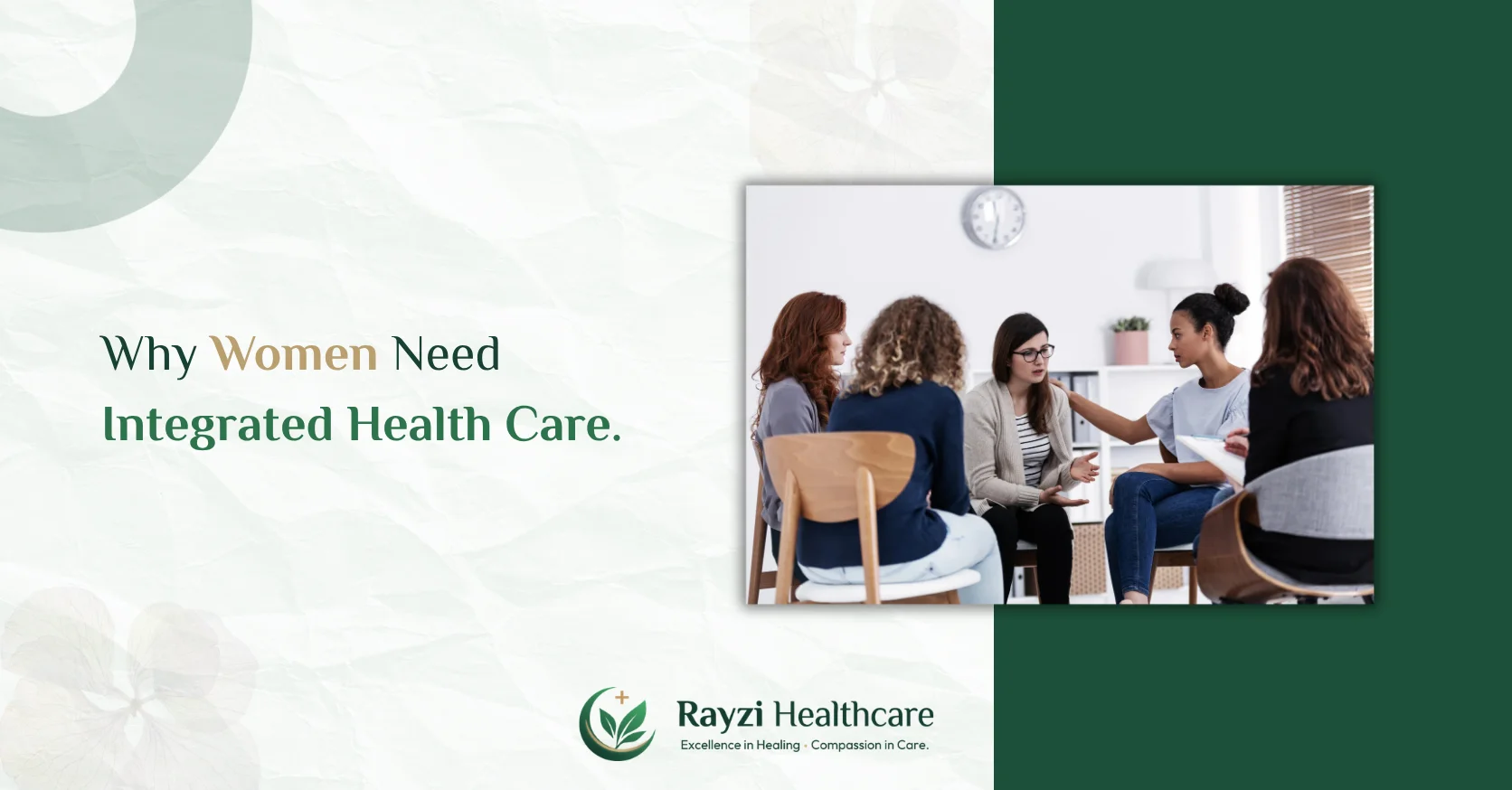
Consider the last time you walked out of a doctor’s appointment and felt like they really understood it. Not just where your symptoms place you in a box. The whole thing.
This moment is difficult to remember for many women.
We are used to being sorted. Mental health is one provider. Physical stuff goes to another. When it comes to hormones, the questions tend to fall somewhere in between and are usually greeted with a shrug or something like a pamphlet.
Integrated health care is a different way of doing things entirely.
The Disconnect Has a Real Cost
When your mental and physical health are treated as two unrelated departments, things fall through.
A provider who is unaware that you are struggling with anxiety may simply not piece together the connection between your disordered sleep or the tension headaches that manifest an every-other-week manner. A therapist who knows nothing about your hormonal history may miss a pattern that explains a lot.
Women have a cyclical body that is truly, terribly responsive to stress in a way that manifests as physical illness. It is just how it works. Yet it does note that a model which assumes one checkup each year likely didn’t consider your personal biology, and this shortfall carries ramifications.
Hormones Are Not a Side Note
One of the more quietly frustrating things about navigating women’s health is how often hormonal factors get treated as secondary. You mention that your mood tanks before your period and someone hands you a pamphlet. You bring up brain fog and exhaustion during perimenopause and get told it is just part of it.
It may be common. That does not mean it should be brushed past.
Hormonal shifts across the menstrual cycle, pregnancy, postpartum recovery, and menopause have a real, measurable effect on brain chemistry, sleep, emotional regulation, and energy. When the provider managing your mental health understands that, and when your primary care doctor is asking about it too, the care you receive starts to actually make sense for your life.
Postpartum Deserves Its Own Conversation
Around one in five women experience a postpartum mood disorder. Most go undiagnosed, not because they did not show up, but because the mental health piece and the obstetric piece happen in different offices that never compare notes.
Integrated care does not allow for that gap. Someone is watching both your body’s recovery and what is happening emotionally, during one of the most demanding seasons of a woman’s life.
There Is Also the Part Nobody Charts
No appointment ever really asks about this: how much you are holding for other people.
The invisible weight that most women carry, tracking everyone else’s appointments, feelings, and needs on top of their own, is real and it adds up. It affects sleep. It affects how you feel in your body. It chips away at the kind of mental space you need to actually take care of yourself. And it almost never comes up in a standard checkup.
A care team that is paying attention to the full story will eventually get there. And when someone finally asks, the kind of support they can offer changes completely.
What to Actually Look For
Not every practice that uses the word integrated truly is. A few things worth paying attention to when you are choosing where to go:
- Your mental health provider knows your physical health history, and vice versa.
- Someone on your team is connecting hormonal patterns to your mood, energy, and sleep.
- You are not re-explaining your full history at every visit.
- The word “normal” is not being used to dismiss something that is genuinely bothering you.
- You leave feeling like you were actually heard.
It is a higher bar. It also makes more difference than most people realize until they experience it.
What Rayzi Was Built For
Rayzi HealthCare LLC in Houston brings psychiatric care, women’s wellness, and primary care together in one practice. Dr. Rasheedah Adewumi, DNP, PMHNP-BC, has more than 20 years in healthcare and approaches each patient with the kind of attention that accounts for your full story, not just what fits neatly into a chart.
The Rayzi Women’s Center is specifically designed around the things that tend to get glossed over elsewhere: hormonal mood evaluations, perinatal and postpartum mental health, and anxiety and depression care that takes women’s experiences seriously rather than treating them as a footnote.
Telehealth is available, so you can access care wherever your life actually is right now.
You Should Not Have to Keep Starting Over
If you are tired of care that only sees part of you, Rayzi is worth reaching out to.
Book your appointment!
Phone: (832) 675-9429
Email: rayzihealthcare@gmail.com | rayziwomenscenter@gmail.com
Telehealth available.


No comment