
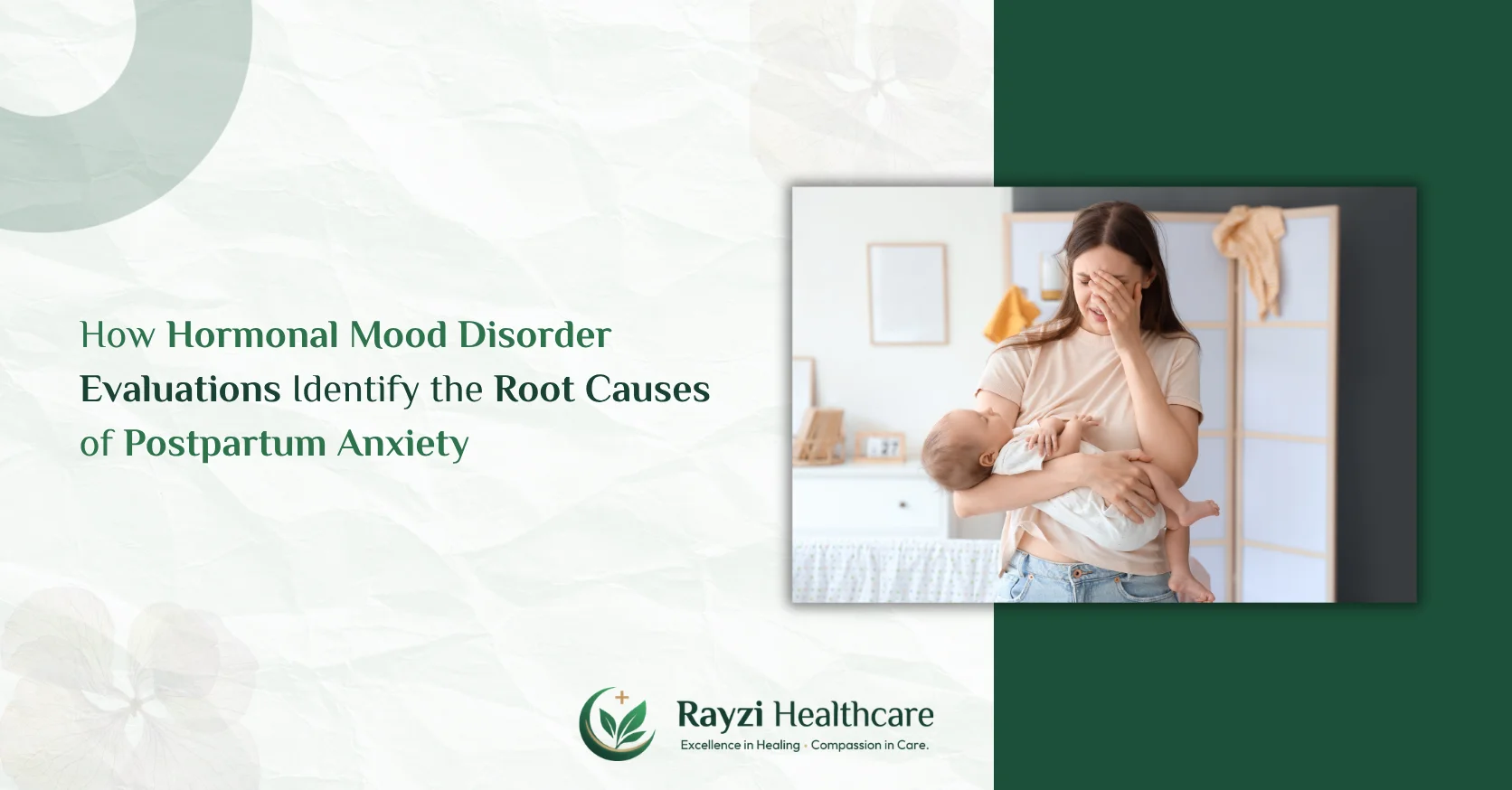
It usually starts small. Checking the baby monitor one extra time before bed. Then two extra times. Then lying awake doing math on hours of sleep instead of actually sleeping during the hours available.
Most postpartum checkups happen around six weeks, focus mostly on physical recovery, and end with some version of “that’s pretty normal, give it time.”
Sometimes it really is just a phase that fades as sleep improves. Sometimes it doesn’t fade. Three or four months out, the anxiety is still there, still running the body like an alarm that won’t shut off, and “give it time” has stopped meaning anything.
That’s usually the point where it’s worth asking whether something hormonal is driving this, not just the stress of having a newborn.
Everyone Blames the Hormones, but Almost Nobody Tests Them
“It’s the hormones” gets said constantly after a baby arrives. Family says it. Friends say it. Sometimes providers say it too, as shorthand for this is normal, it’ll pass.
There’s real truth underneath that phrase. Estrogen and progesterone climb to their highest levels of a person’s life during pregnancy, then drop off a cliff within about 72 hours of delivery. That’s one of the steepest hormonal shifts the human body goes through.
What usually doesn’t happen is anyone actually checking where those levels land afterward. Thyroid function. Cortisol patterns.
Whether progesterone is dropping in an unusually severe way, the phrase gets used as an explanation far more often than it gets investigated as one.
What a Hormonal Mood Disorder Evaluation Looks Like in Practice
It starts with an actual conversation, not a five-question screener. When did the anxiety start. Did it build slowly or hit hard around a specific point, like two weeks postpartum or right after weaning. What does a bad day look like physically, not just emotionally.
From there, it typically includes:
- A thyroid panel, since postpartum thyroiditis is common and produces anxiety and irritability that looks almost identical to a primary mood disorder
- A look at sleep patterns, because a few hours of broken sleep a night will amplify any hormonal anxiety that’s already present
- Family and personal history, particularly PMDD or anxiety tied to past hormonal shifts, since that history tends to predict postpartum risk
- Bloodwork to check where hormone levels actually sit, instead of guessing based on timeline alone
None of this replaces talking through how someone is coping day to day. It adds a layer underneath that conversation.
Why This Changes What Treatment Looks Like
Hormonally driven anxiety and purely situational anxiety can look identical in a short visit. Racing thoughts, physical tension, trouble sleeping, all the same on the surface. The treatment that actually works tends to be different depending on which one it is.
When thyroid function turns out to be off, correcting it directly can resolve a meaningful chunk of the anxiety without touching a psychiatric medication at all.
When progesterone withdrawal looks unusually steep, that shapes which medication makes sense and on what timeline. Without the evaluation, treatment ends up built on a guess instead of a finding.
This Isn’t a Failure to Cope
People dealing with postpartum anxiety apologize for it constantly. Sorry for being dramatic. Sorry for not just pushing through it the way other parents seem to. None of that apology is necessary
Postpartum thyroiditis alone affects roughly one in twenty postpartum women, and it’s missed often because the symptoms look exactly like ordinary new-parent anxiety.
Once a hormonal cause gets identified and treated, the anxiety frequently drops, sometimes dramatically. Some worry stays, because that’s part of being a parent. It just stops taking over.
Rayzi Women’s Center Can Help You Find Out What’s Actually Going On
Dr. Rasheedah Adewumi, DNP, PMHNP-BC brings over six years as a nurse practitioner and more than 20 years total in healthcare to treating postpartum anxiety, depression, and the hormonal mood disorders that often sit underneath them.
Hormonal mood disorder evaluations at Rayzi Women’s Center go past a standard screening to actually look at what’s happening in the body.
Appointments are available in person in Houston or by telehealth.
If the anxiety hasn’t lifted and “give it time” hasn’t worked, it might be time to actually check.
Phone: (832) 675-9429
Email: rayziwomenscenter@gmail.com
Address: 6671 Southwest Freeway, Houston, TX 77074
Telehealth services available.
Compassionate care for your mind and body, at every stage of motherhood.


No comment